
Is Weed Legal in Myanmar?
Comprehensive legal status information for Weed in Myanmar
No specific cannabis law information available
- Recreational
- illegal
- Medical
- illegal
- Possession
- All possession illegal
- Buying/Selling
- All sale illegal
- Tourists
- Laws apply to all visitors
Detailed Information
Current Legal Status
Cannabis is currently illegal in Myanmar. The prohibition of cannabis dates back to the 1970s when the government enacted strict drug laws as part of a broader campaign against narcotics. The Narcotic Drugs and Psychotropic Substances Law of 1993 further solidified the ban, categorizing cannabis as a controlled substance. Despite its historical use in traditional medicine and cultural practices, the legal framework has remained largely prohibitive, with no significant moves towards legalization or decriminalization as of now.
Possession Penalties
Criminal penalties for possession of cannabis in Myanmar are severe. Individuals caught with small amounts, typically less than 5 grams, may face fines ranging from 100,000 to 500,000 Myanmar Kyat (approximately $50 to $250) and imprisonment for up to 5 years. For larger amounts, such as 5 grams to 1 kilogram, penalties can escalate to fines of up to 1 million Kyat (around $500) and imprisonment for 5 to 10 years. Repeat offenders face harsher penalties, often resulting in longer prison sentences and higher fines, reflecting a zero-tolerance approach towards drug offenses.
Cultivation & Distribution
The cultivation and distribution of cannabis are met with severe penalties in Myanmar. Growing cannabis plants can lead to imprisonment for 5 to 15 years, depending on the scale of the operation and the amount of cannabis produced. Distribution or trafficking of cannabis, particularly if it involves more than 1 kilogram, can result in life imprisonment or even the death penalty under certain circumstances. The government takes a stringent stance against drug trafficking, often prioritizing these cases in law enforcement efforts.
Enforcement
Law enforcement in Myanmar takes drug-related offenses very seriously, with police actively conducting raids and monitoring suspected drug activities. The enforcement of cannabis laws is strict, with police often prioritizing drug offenses in their operations. The court system typically upholds the harsh penalties associated with cannabis offenses, with little room for leniency. Convictions for drug-related crimes can lead to lengthy prison sentences, and the legal process is often criticized for lacking transparency and fairness.
Medical Exceptions
Currently, there are no recognized medical exceptions or allowances for CBD in Myanmar. The government has not established a legal framework for medical cannabis, and any use of cannabis for medicinal purposes remains illegal. This lack of medical recognition contrasts with trends in other countries where cannabis is increasingly being accepted for therapeutic use.
Reform Efforts
As of now, there are limited reform efforts regarding cannabis laws in Myanmar. While some advocacy groups have emerged, pushing for decriminalization and legalization, these movements face significant challenges due to the prevailing legal framework and societal attitudes towards drugs. Public opinion remains largely conservative, with many citizens supporting strict drug laws. However, there is a growing discourse around the potential benefits of reform, particularly in the context of economic development and public health.
Travel Warning
Tourists traveling to Myanmar should be aware of the strict drug laws and the zero-tolerance policies regarding cannabis. Possession, use, or trafficking of cannabis can lead to severe legal consequences, including lengthy imprisonment. Visitors are strongly advised to refrain from any involvement with cannabis, as the legal repercussions can be severe, and the local authorities are vigilant in enforcing drug laws.
Comparison to Neighbors
- Myanmar's cannabis laws are among the strictest in Southeast Asia, particularly when compared to neighboring countries like Thailand, which has recently legalized medical cannabis. In contrast, countries like Laos and Cambodia also maintain strict prohibitions but have seen some movements towards reform.
- Cross-border risks are significant, as Myanmar shares borders with countries that have varying degrees of cannabis legality. For example, travelers crossing into Thailand may find a more lenient approach to cannabis, but bringing cannabis across borders is illegal and can result in severe penalties in both countries.
Recent News
Latest updates from trusted news sources
From heady highs to desperate lows: Inside Thailand’s return to medical-only cannabis
From heady highs to desperate lows: Inside Thailand’s return to medical-only cannabisAfter Thailand’s u-turn to reclassify cannabis as a controlled herb - effectively banning its recreational use - ma...
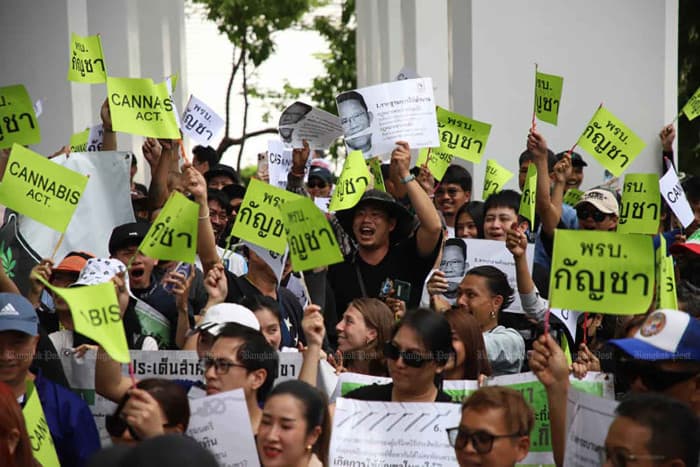
Cannabis activists demand parties clarify stance
Thailand General Cannabis activists demand parties clarify stance PUBLISHED : 14 Jan 2026 at 05:46 NEWSPAPER SECTION: News WRITER: Apinya Wipatayotin Small Medium Large Listen to this article Play Pau...

Haze of confusion in Thailand as government flips on cannabis law
People walk past a cannabis shop on Sukhumvit Road in Bangkok, set up after a ban on the drug was lifted in Thailand three years ago. Photograph: Chalinee Thirasupa/ReutersView image in fullscreenPeop...
Anti-ganja group demands political parties clearly announce their stand on cannabis
nullNews Anti-ganja group demands political parties clearly announce their stand on cannabisTHURSDAY, JANUARY 15, 2026 PlayLoading... An anti-cannabis group is calling on political parties to clearly ...
Thailand plans new cannabis rules to rein in dispensary boom
Thailand plans new cannabis rules to rein in dispensary boomThe new rules will deepen uncertainty for the fledgling cannabis industrySummariseShareUnder a draft rule, cannabis sales are limited to med...
Policy History
Track the evolution of cannabis policies in Myanmar over time.
No specific cannabis law information available
No specific cannabis law information available
No specific cannabis law information available
No specific cannabis law information available
No specific cannabis law information available
No specific cannabis law information available
No specific cannabis law information available
No specific cannabis law information available
No specific cannabis law information available
No specific cannabis law information available
Disclaimer
This guide is for informational purposes only. We do not encourage or facilitate illegal activity. Laws and enforcement vary by location — always follow local regulations. Consult with local authorities or legal professionals for the most current and accurate information regarding Weed in Myanmar.